Rosacea treatment online · Australia-wide
Online rosacea treatment, built around your skin
See an Australian doctor about your rosacea, redness or flushing by private video, wherever you live in Australia. Rosacea flares and settles in its own pattern for every person, so Qr8 care is built on the science of why, with your own nurse between appointments.
Quick answer
Can I get rosacea treatment online?
Yes. You can see an Australian registered doctor about rosacea, redness or flushing by private video, from anywhere in Australia, with no referral needed. Your doctor matches your plan to the features of your rosacea, and your nurse helps you manage triggers and flares between appointments.
- Private video consultation with an Australian registered doctor, 7 days a week
- No referral needed, wherever you live in Australia
- Your plan and all costs by email before you decide
- Your own nurse between appointments, with answers within 24 business hours
- One team
Caring for you
Your doctors and nurses work together, each bringing their clinical expertise to your care.
- The whole plan
Medical treatment is only part of it
Skincare, sunscreen, how you apply products and treatment, and managing your individual triggers all matter in rosacea. We help you put those pieces together alongside your medical care.
- Your nurse
Help when your skin is struggling
Redness, bumps, burning, stinging and sensitive skin can change over time. Your nursing team is there to help you manage what’s happening between appointments.
- Continuity
We get to know you and your skin
Your team knows your history and keeps up with how things are going, so you don’t have to start again each time you need us.
Understanding it
What is rosacea?
Rosacea is a chronic (lifelong) inflammatory skin condition that most commonly affects the centre of the face.
It can cause persistent redness, flushing, visible blood vessels, bumps and pustules, as well as skin that feels dry, sore, burning, stinging or sensitive.
Rosacea tends to flare and settle over time, and the symptoms can look very different from one person to another.
Some people predominantly experience redness and flushing. Others struggle with inflammatory bumps. Many experience both, alongside skin that reacts to products it previously tolerated.
That variability is one reason rosacea needs to be managed according to what is actually happening in your skin.
Who gets rosacea?
Rosacea is common. A large review of studies worldwide estimated that around 5% of adults have it.11 It usually appears after the age of 30, is diagnosed more often in women and in fair skin, and can be harder to recognise in darker skin tones, where redness is less visible.
Features, not fixed types
Rosacea used to be sorted into four subtypes. Experts now describe it by the features each person has, such as persistent redness, flushing, bumps and pustules, visible blood vessels, thickened skin or eye symptoms, because most people have more than one and they change over time.12
Rosacea or perioral dermatitis?
Small red bumps around the nose, mouth or eyes are often mistaken for rosacea, but they can also be perioral dermatitis, a different condition that needs a different approach. Telling them apart is one of the first things your doctor will look at.
The causes
What causes rosacea?
No single causeThere isn’t one single cause of rosacea.
It appears to involve a combination of genetic factors and changes in the skin’s immune, nervous and vascular systems.
Sun exposure is thought to play a part in rosacea flares, and overall progression of the disorder. UV radiation increases free radicals in the skin that stimulate the immune system as well as the release of chemicals that cause dilation of blood vessels.
Common triggersWhat we know more clearly is that certain things can trigger or worsen rosacea symptoms.
Common triggers include sun exposure, heat, changes in temperature, exercise, alcohol, spicy food and stress. Skincare products can also aggravate skin that is already sensitive or reactive.
Your triggers are your ownTriggers are different for everyone.
Something that causes intense flushing or redness in one person may have little effect on someone else.
This is why identifying what affects your skin, and knowing how to manage it, is an important part of rosacea care.
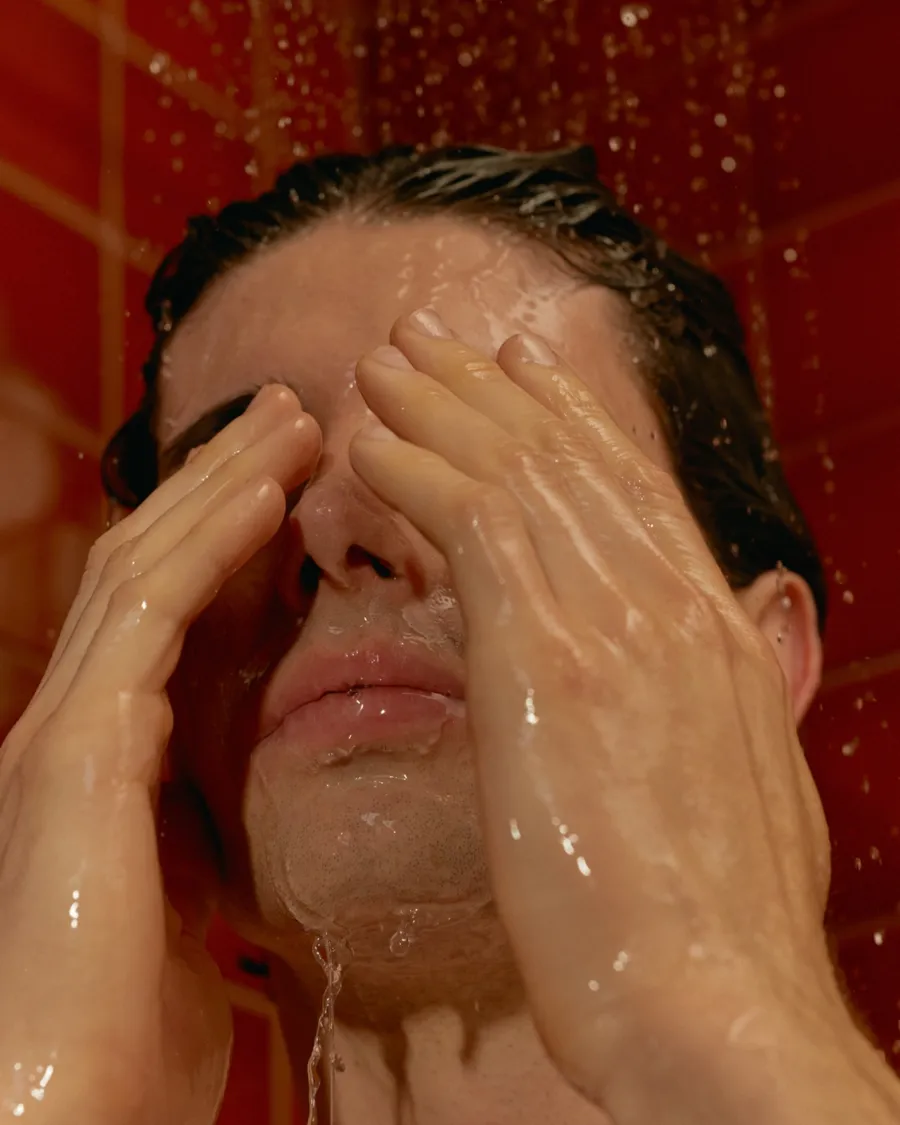
Something that causes intense flushing in one person may have little effect on someone else.
Long-term care
Tried treatments that didn’t last?
Rosacea is chronic. It flares and settles, sometimes for no obvious reason, and what calms your skin one season may not work the next.
If you’ve already tried creams, facials or laser and found the redness, flushing or bumps came back, that isn’t a failure on your part. It’s the nature of the condition. The research points to care that matches each feature of your rosacea and changes as your skin does.
That’s how Qr8 care is built. Your doctor looks at what you’ve tried before and why it may not have held. Your nurse stays with you between appointments, helping you understand your triggers and adjusting your skincare as your skin and life change. The aim is to help you take back control of your rosacea for the long term.
Management
How is rosacea managed?
There isn’t one approachWhat is appropriate depends on your symptoms, your skin, your triggers and how your rosacea changes over time.
Medical treatment can be an important part of getting redness and inflammatory bumps under control, but it is only one part of a comprehensive plan. Skincare, sun protection, supporting the skin barrier and identifying individual triggers all matter too.
In-clinic proceduresSome features of rosacea, particularly visible blood vessels, may also benefit from in-clinic procedures such as vascular laser or light-based treatments.
Qr8 doesn’t perform these procedures, so our nurses can provide independent guidance about the options available and when an in-clinic treatment may be worth considering.
This is where Qr8 is differentYour doctor manages the medical side of your care.
Your nursing team helps with skincare, application, triggers, treatment tolerance and the practical day-to-day management that happens between appointments.
The science
How strong is the evidence?
Rosacea attracts a lot of advice. Here’s what the research actually shows about the most common approaches.
-
Knowing and managing your triggers
StrongSun, heat, alcohol, spicy food and stress are consistently reported triggers, but they vary between people. Identifying your own is recommended in international management guidance.1
-
Gentle skincare and daily sun protection
StrongGuidelines recommend gentle cleansing, a well-tolerated moisturiser and daily broad-spectrum sunscreen as the foundation of rosacea care. Supporting the skin barrier has been shown to reduce dryness and sensitivity.1,10
-
Medical treatment after assessment
Well studiedMedical treatment has a long track record in rosacea research, supported by many randomised trials. Current guidance matches treatment to the features each person has, rather than using one approach for everyone.1,2
-
Vascular laser and IPL
Some featuresStudies support laser and intense pulsed light for visible blood vessels and persistent background redness.1,2 They don’t address flushing triggers or bumps, and results usually need maintaining over time.
-
Exfoliating facials, scrubs and peels
LimitedThere’s little clinical research supporting exfoliating treatments for rosacea. Rosacea-prone skin is often easily irritated, and exfoliation can add to redness, stinging and sensitivity.
This summary is general scientific information, not personal advice. Numbers refer to the references at the end of this page.
Want to know what applies to your skin? A Qr8 doctor can assess it and talk you through your options.
Book a doctor consultationHow it works
Your rosacea care in three simple steps
-
 Step one
Detailed questionnaire & photos
Complete a detailed health questionnaire and send us photographs of your skin. This gives your clinical team important information before you meet.
-
 Step two
Meet your doctor
See an Australian registered doctor by private video consultation, 7 days a week, 7am to 9pm. They’ll review your history and photographs, assess your concerns and talk with you about what may be appropriate.
-
 Step three
Care between appointments
Your nurses help with your skincare routine, answer questions and keep up with how things are going. Email us. Call us. Book a video call.
Skincare
Why skincare matters in rosacea
Rosacea-prone skin is often sensitive and easily irritated. Redness, burning, stinging, dryness and soreness can all be made worse by skincare that your skin doesn’t tolerate well.
The right routine can help support the skin barrier and work alongside your medical treatment. But this doesn’t necessarily mean adding more products. Often, it means simplifying what you already use and removing things that may be contributing to irritation.
How you use your skincare matters too. Cleansing, application technique, the order products are applied and how quickly new products are introduced can all affect sensitive, reactive skin.
This is where your Qr8 nursing team can help. We review the skincare you’re actually using and help you understand what to keep, what may be aggravating your skin, and how to use your routine alongside your medical care.
Your routine
What skincare is best for rosacea?
There isn’t one skincare routine that works for everyone with rosacea. The aim is usually to keep things simple, support the skin barrier and minimise unnecessary irritation.
Gentle cleansing, a well-tolerated moisturiser and daily sun protection are the foundations. Beyond that, more products and more active ingredients are not necessarily better, particularly when skin is already red, sore, burning or reactive.
What you use matters, but how you use it matters too. Cleansing, application technique, product layering and introducing changes gradually can all affect how well sensitive skin tolerates a routine.
Your Qr8 nurse reviews the skincare you’re already using and helps you work out what to keep, what may be aggravating your skin and whether anything is actually missing.
Simple skincare rules for rosacea
- Keep your routine simpleKeep adding serums and active products when your skin is irritated or sensitive
- Use a gentle cleanser and lukewarm waterScrub, use cleansing brushes or repeatedly cleanse reactive skin
- Moisturise to support the skin barrierAssume dryness means you need more exfoliation
- Use sunscreen every dayIgnore sun exposure when working out what triggers your rosacea
- Introduce changes graduallyStart several new products or treatments at the same time
Your Qr8 nursing team can help you adapt these principles to your own skin, products and triggers, because what works for one person with rosacea may not work for another.
Your budget
Do I need expensive skincare for rosacea?
No. Price doesn’t tell you whether a product will suit rosacea-prone skin.
A simple cleanser, moisturiser and sunscreen may be all some people need alongside their medical care. The priority is finding products your skin tolerates and that have a clear role in your routine, not buying more of them.
Qr8 doesn’t have its own skincare brand to sell you. Your nursing team can review what you already own and recommend changes only where they’re likely to be useful.
FAQs
Your biggest questions, answered
What causes rosacea?
Rosacea has no single cause. Research points to a combination of genetic factors and changes in the skin’s immune, nervous and blood vessel systems. Sun exposure appears to play a part in both flares and how rosacea progresses over time.
Triggers such as heat, alcohol and stress don’t cause rosacea, but they can bring on flares in people who have it.
Who gets rosacea?
Around 5% of adults worldwide are estimated to have rosacea. It usually appears after 30 and is diagnosed more often in women and in fair skin, although it occurs in all skin tones and can be under-recognised in darker skin.
Are Demodex mites linked to rosacea?
Demodex mites live on most adults’ skin. People with rosacea often have higher numbers of them, and research suggests they may contribute to inflammation in some people. Whether they help cause rosacea, or increase because of changes rosacea produces in the skin, is still being studied.
What are the main symptoms of rosacea?
Rosacea can cause persistent facial redness, flushing, visible blood vessels, bumps or pustules, and skin that burns, stings or feels unusually sensitive.
Some people also develop eye symptoms.
The way rosacea presents can vary considerably between people.
Can rosacea redness be treated?
Yes. There are medical options for managing persistent facial redness associated with rosacea. The right approach depends on whether you have background redness, flushing, visible blood vessels, or a combination of these.
Your doctor can assess what is contributing to your redness and discuss appropriate options.
Can rosacea be cured?
Rosacea is a chronic skin condition, so management is usually about controlling symptoms and reducing flares rather than permanently curing it. What your skin needs can also change over time.
Why does my rosacea keep flaring?
Rosacea naturally tends to flare and settle. Sun exposure, heat, temperature changes, exercise, alcohol, spicy food, stress and skincare can all contribute, but triggers vary considerably between people.
Understanding what actually affects your skin is an important part of managing it.
Can rosacea look like acne?
Yes. Rosacea can cause bumps and pustules that look similar to acne, but they are different skin conditions and are managed differently. Some people can also have both acne and rosacea at the same time.
Do laser and IPL treatments help rosacea?
Laser and light-based procedures can be useful for some features of rosacea, particularly persistent redness and visible blood vessels.
Qr8 doesn’t perform these procedures, so our nurses can provide independent guidance about the options available and when an in-clinic treatment may be worth considering.
Can rosacea be treated online?
Yes. Rosacea is a chronic condition that often needs ongoing management rather than a single appointment.
At Qr8, your doctor manages the medical aspects of your care, while your nursing team helps you put the plan into practice between appointments, with skincare, triggers, application, tolerability and the questions that come up as your skin changes.
That ongoing support helps you stay on track with your plan, rather than being left to manage everything yourself between medical appointments. If something requires in-person assessment or treatment, your clinical team will let you know.
How much does Qr8 rosacea care cost?
Your initial video consultation with one of our registered doctors is $55 AUD.
Following your consultation, your doctor will email a personalised care plan where clinically appropriate, with all relevant costs clearly outlined before you choose to proceed. Fees vary according to your care and include clinical support throughout. We accept Visa, Mastercard, Afterpay and direct debit.
We are a private billing service and Medicare rebates are not available. Depending on your cover, you may be able to claim some costs through your private health insurer. Receipts are available on request.
Resources
All articles + Read more
Acne · Rosacea
Are your supplements helping or causing your acne or rosacea?
 + Read more
Skin health
How does chronic stress affect your skin?
 + Read more
Skincare
Hypochlorous acid: what it can and can’t do
 + Read more
Perioral dermatitis
Perioral and periorificial dermatitis
 + Read more
Skincare
Is petrolatum (Vaseline) a good moisturiser?
 + Read more
Sun protection
Why mixing products with your sunscreen is a no-go
References
- Thiboutot D, Anderson R, Cook-Bolden F, et al. Standard management options for rosacea: the 2019 update by the National Rosacea Society Expert Committee. J Am Acad Dermatol. 2020;82(6):1501-1510. https://doi.org/10.1016/j.jaad.2020.01.077
- Zhang H, Tang K, et al. Rosacea Treatment: Review and Update. Dermatol Ther. 2021. PMID: 33170491.
- Egeberg A, Hansen PR, et al. Patients with Rosacea Have Increased Risk of Depression and Anxiety Disorders: A Danish Nationwide Cohort Study. Dermatology. 2016. PMID: 26954304.
- Heisig M, Reich A. Psychosocial aspects of rosacea with a focus on anxiety and depression. Clin Cosmet Investig Dermatol. 2018. PMID: 29551906.
- McAleer MA, Fitzpatrick P, et al. Papulopustular rosacea: prevalence and relationship to photodamage. J Am Acad Dermatol. 2010. PMID: 20462665.
- Woo YR, Lim JH, et al. Rosacea: Molecular Mechanisms and Management of a Chronic Cutaneous Inflammatory Condition. Int J Mol Sci. 2016. PMID: 27649161.
- Forton FMN. The Pathogenic Role of Demodex Mites in Rosacea: A Potential Therapeutic Target Already in Erythematotelangiectatic Rosacea? Dermatol Ther. 2020. PMID: 33095403.
- Searle T, Ali FR, et al. The versatility of azelaic acid in dermatology. J Dermatolog Treat. 2020. PMID: 32730109.
- Schulte BC, Wu W, et al. Azelaic Acid: Evidence-based Update on Mechanism of Action and Clinical Application. J Drugs Dermatol. 2015. PMID: 26355614.
- Draelos ZD, Ertel K, et al. Niacinamide-containing facial moisturizer improves skin barrier and benefits subjects with rosacea. Cutis. 2005. PMID: 16209160.
- Gether L, Overgaard LK, Egeberg A, Thyssen JP. Incidence and prevalence of rosacea: a systematic review and meta-analysis. Br J Dermatol. 2018. https://doi.org/10.1111/bjd.16481
- Gallo RL, Granstein RD, Kang S, et al. Standard classification and pathophysiology of rosacea: the 2017 update by the National Rosacea Society Expert Committee. J Am Acad Dermatol. 2018;78(1):148-155. https://doi.org/10.1016/j.jaad.2017.08.037

Ready to understand your rosacea?
Start with a medical assessment and a conversation about what’s happening with your skin.