Does LED light therapy benefit skin? (And do you need an at-home mask?)
Your burning questions about LED light therapy for skin answered, including whether you actually need an at-home device.
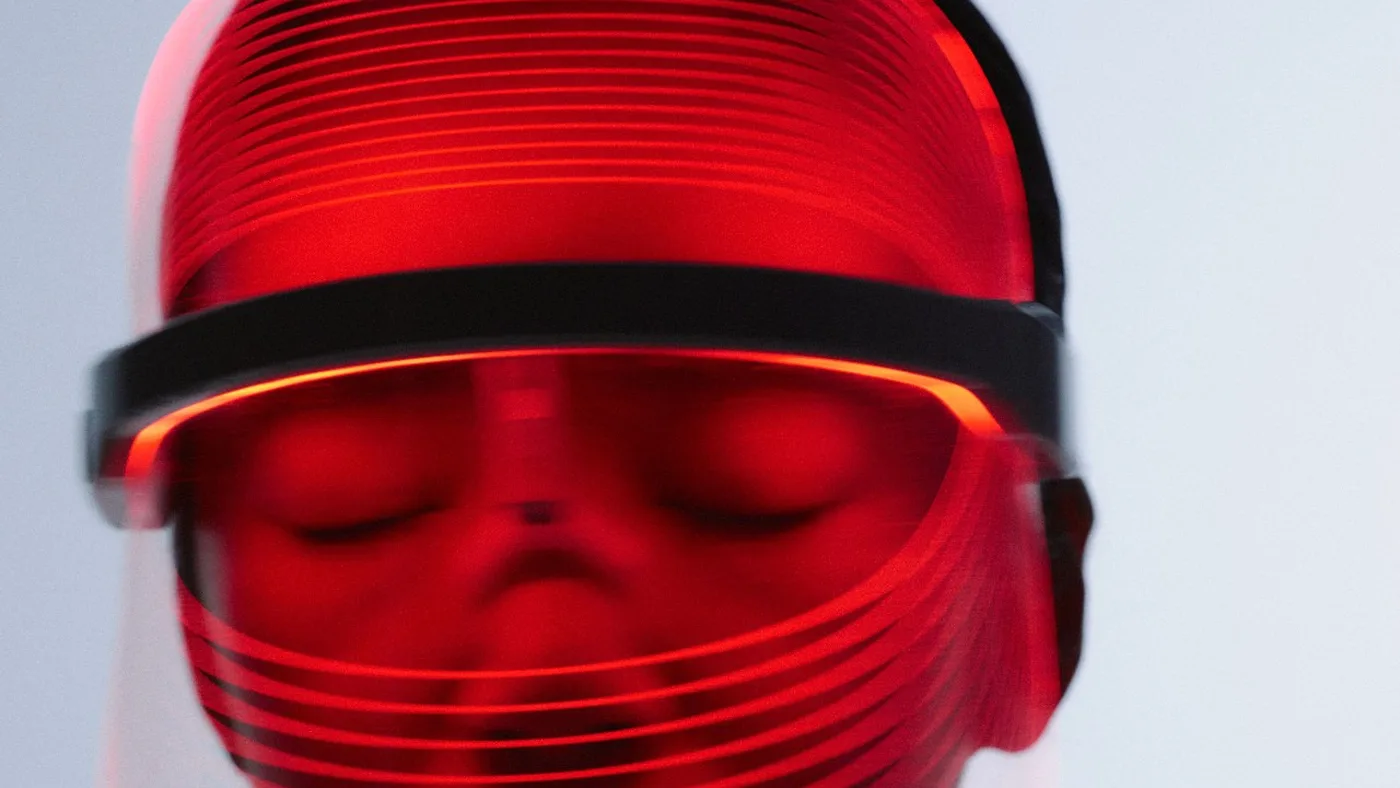
The short version
- In-clinic LED at professional strength has good evidence for some skin concerns, but needs a course of treatments and time.
- At-home masks are much less powerful. The research on them is limited, small and short-term, and results are modest at best.
- Plan on using a home device almost every day for at least 4 months. If you won’t commit to that, don’t buy one.
- Blue or violet light, and heat, may worsen melasma and pigmentation, especially in deeper skin tones.
- Tiny facial wands are almost certainly too weak to do anything. Save your money.
What LED is
LED stands for light-emitting diode. LEDs turn electrical current into light of different wavelengths.
That light is absorbed by enzymes in cell membranes and mitochondria. Depending on the wavelength, it switches certain cell processes on or off, which can have beneficial effects. The technical term is ‘photobiomodulation’.
- It isn’t laser or IPL, although LEDs can deliver the same wavelengths of light.
- It doesn’t work through heat. LEDs are non-thermal, so the effect comes from the light itself.
A quick history
LED therapy dates back to the 1960s, when NASA developed the light-emitting diode as an alternative to laser, to help heal wounds in zero gravity. It only became clinically useful in the 1990s, and the first report of clinical use was in 2002.
What LED therapy can do
Multiple good-quality studies show that in-clinic LED can have beneficial effects when it’s delivered:
- at professional intensity and dose levels
- at very specific wavelengths, which reach different depths in the skin
Benefits seen in these studies include improvements in:
- wrinkles
- acne lesions and scars
- wound healing
- hair growth
- sun damage
The catch: it takes a course of treatments, often as many as 8 sessions over 4 weeks, and results don’t peak until 4 to 6 months afterwards.
Effects are also greater when the light is ‘pulsed’ rather than continuous.
LED and sun damage
Don’t expect miracles from LED on its own. It works best combined with other treatments. Topical retinoids plus sun protection remain the gold standard for preventing and repairing the signs of ageing from sun damage: rough, dry, wrinkled or sagging skin, uneven texture and tone, and enlarged pores.
 RelatedWhat is microneedling (and do I need it)?
Is LED safe?
LEDs are considered safe. Because they don’t use heat, they don’t need to damage skin to get results.
LED isn’t for you if you:
- take photosensitising medicines
- have a photosensitive skin condition, such as lupus or melasma
- have epilepsy or seizures
- have a light-sensitive (photophobic) condition, such as migraine or some eye conditions
Melasma, pigmentation and deeper skin tones
If you have melasma or hyperpigmentation, or a deeper skin tone, the colour of the light and any heat matter.
- Blue and violet light can darken skin. In a clinical study, blue-violet light (415 nm) caused dose-dependent darkening of the skin that lasted up to 3 months. Red light (630 nm) didn’t cause any [19]. Repeated blue LED light caused visible darkening in a second study [21].
- Deeper skin tones are most affected. Pigment cells have a blue-light sensor, and long-lasting darkening after blue light is seen in skin type III and darker [20]. Reviews now recognise visible light, especially blue-violet light, as a driver of melasma and post-inflammatory hyperpigmentation, conditions that disproportionately affect deeper skin tones [22].
- Heat may play a part too. In a study of 1,001 people with melasma, longer exposure to heat from cooking fires or work was linked to more severe melasma [23]. LED doesn’t need heat to work, but some home devices still warm the skin: one neck device studied reached up to 38 °C [12].
Before you buy: ask the manufacturer exactly which wavelengths the mask emits, including any blue or violet settings, and whether it heats up. If you have melasma or pigmentation, avoid blue and violet settings, and avoid any device that gets warm on your face.
Recalls and advertising rulings
- A mask recall. In 2019, Neutrogena’s red-and-blue Light Therapy Acne Mask was recalled in Australia and the US. The TGA warned that repeated exposure could cause retinal damage, possibly irreversible, in a small group of people with certain eye conditions [25].
- Misleading claims. In 2025, the UK’s advertising regulator upheld complaints against four LED face mask sellers for claiming their masks treat acne or rosacea, or are ‘clinically proven’, without the medical registration needed to make those claims [26].
What about at-home LED masks?
In-clinic devices
- Thousands of diodes on an adjustable panel, positioned close to the face
- High diode density and light intensity (‘irradiance’), so they deliver a lot of energy to the skin
- Can deliver one wavelength or cycle through several in one session, targeting different concerns at once, such as acne, scars and inflammation
At-home masks
- A hundred diodes or fewer, usually in a hands-free mask (sometimes a hand-held device)
- Less powerful, in both diode density and irradiance
- Limited scientific evidence, mostly from small, short studies
Because home devices work at lower intensity, any results tend to be more gradual and less pronounced than with professional equipment [17].
What the research says
In-clinic treatment
These findings come from professional treatments, not home devices.
- A systematic review of 31 randomised trials of LED for skin conditions found the best support for acne, cold sores and shingles, and acute wound healing. Most other skin uses had weaker evidence. The authors recommended LED for use by doctors in clinical practice [8].
- Common problems across this research include small studies (often fewer than 20 people), no blinding, no sham (dummy) device, and widely varying treatment settings [8].
- In a randomised trial of 136 people, in-clinic red light treatment twice a week for 30 sessions improved skin roughness and collagen density compared with no treatment [15]. It used a professional light source, not LEDs, and nothing like a home mask.
At-home devices for acne
- A systematic review of 37 home-device trials concluded that home LED devices could be recommended for acne, but noted few randomised trials and no data on long-term effectiveness or safety [3].
- A meta-analysis of 14 blue-light acne trials found no significant difference in the number of spots compared with other treatments. Most trials were small, short and at high risk of bias [9].
At-home devices for wrinkles
- In a randomised trial of 70 people using a home LED device on the neck against a sham device, investigators rated neck wrinkles as more improved at 8, 12 and 16 weeks. The participants’ own ratings of improvement didn’t differ significantly from the sham group [13].
- A 2020 study of 48 women compared a home LED face mask (red and near-infrared, 20 minutes every evening for 4 weeks) plus a hyaluronic acid serum with the serum alone. Skin-imaging instruments showed both groups improved in fold depth, chin firmness, skin density, pore size and flaking, with bigger improvements in the mask group: for example, smile-line folds reduced by 43% compared with 28%. Participants’ satisfaction was only reported for both groups combined, so we can’t tell whether mask users noticed more of a difference. The paper doesn’t report randomisation or blinding, there was no mask-only group or dummy mask, and the study was funded by the mask’s manufacturer [14].
- A 2026 study of 20 women used a home LED mask (red and near-infrared) for 10 minutes twice a day for 8 weeks, followed by a serum. Of the measures tested, only skin firmness improved significantly (about 31%). Wrinkles, elasticity, skin thickness and pigment didn’t change significantly. There was no control group, the mask and serum were used together, and the study was funded by the mask’s manufacturer. The author describes the results as preliminary [24].
Most of these studies are small and short, and each tests one specific device. Their results can’t be assumed to apply to the mask you see advertised [3, 8].
How often you’d need to use one
Consistency is everything. In published studies, home devices were used almost every day, for weeks to months:
- Acne: 2.5 minutes twice a day for 4 weeks [10], or 10 minutes twice a day for 4 weeks [11]. Home blue-light acne devices are typically used twice a day for 30 to 60 minutes, for 4 to 5 weeks [9].
- Neck wrinkles: 9 minutes a day for 16 weeks [12], or 9 minutes a day, five days a week, for 12 weeks (60 sessions) [13].
- Face masks: 20 minutes every evening for 4 weeks, alongside a serum [14], or 10 minutes twice a day for 8 weeks, followed by a serum [24]. That’s 10 to 20 minutes, once or twice every day.
Changes were measured after weeks to months, not days. For wrinkles, the studies ran for up to 16 weeks (about 4 months) [12, 13], so plan on at least 4 months of near-daily use before judging results. In one study, improvements were still present 8 weeks after people stopped [12], but there’s no data on what happens over years [3]. Reviewers describe home light devices as suited to conditions that need frequent, repeated use [16].
More isn’t better, either. Laboratory research shows that lower light doses stimulate skin cells, while higher doses can have the opposite effect [18]. Doubling up sessions won’t speed things up.
If you’re still keen to buy one
- Be ready to commit. Lower power means you’ll need to use it much more often than an in-clinic device: almost daily for at least 4 months. If you’re not likely to use it that regularly, don’t buy one.
- Do your research. Email companies and ask about their mask’s output, its wavelengths (including any blue or violet light) and whether it heats up.
- Don’t judge by price. These masks are expensive, and price doesn’t always equal quality.
What about the facial wands all over your social feed?
These tiny devices have only a handful of diodes (fewer than five). You need to keep moving the wand around your face to get any light onto your skin.
The claims made for them can be pretty wild, and are often based on studies of powerful, professional-grade devices. Common sense says there’s close to zero chance they deliver enough energy to do anything useful.
Definitely one to save your money on.
The bottom line
- In-clinic LED: evidence-backed for some concerns, but needs a course of treatments and patience.
- At-home masks: limited, mostly small, short-term studies with modest results. Only worth considering if you’ll use one almost every day for at least 4 months.
- Facial wands: skip them.
- Melasma, pigmentation or deeper skin: avoid blue or violet light and anything that heats your skin.
Qr8 is known and loved for skincare myth-busting. Read more evidence-based skincare articles.
Sun damage care at Qr8
Private, ongoing care with our doctors and nurses, Australia-wide. Video consultations from $55.
How we care for sun damageReferences
- Avci P, Gupta A, et al. Low-level laser (light) therapy (LLLT) in skin: stimulating, healing, restoring. Semin Cutan Med Surg. 2013;32(1):41-52. PMID: 24049929.
- Calderhead RG. The photobiological basics behind light-emitting diode (LED) phototherapy. Laser Therapy. 2007;16(2):97-108.
- Cohen M, Austin E, et al. Home-based devices in dermatology: a systematic review of safety and efficacy. Arch Dermatol Res. 2022;314(3):239-46. PMID: 33938981. doi.org/10.1007/s00403-021-02231-0
- Hession MT, Markova A, Graber EM. A review of hand-held, home-use cosmetic laser and light devices. Dermatol Surg. 2015;41:307-20. PMID: 25705949.
- Ngoc LTN, Moon JY, Lee YC. Utilization of light-emitting diodes for skin therapy: systematic review and meta-analysis. Photodermatol Photoimmunol Photomed. 2022. doi: 10.1111/phpp.12841. PMID: 36310510.
- Opel DR, Hagstrom E, et al. Light-emitting diodes: a brief review and clinical experience. J Clin Aesthet Dermatol. 2015;8(6):36-44. PMID: 26155326.
- Pitassi L. Light-emitting diode for acne, scars, and photodamaged skin. In: Issa MCA, Tamura B, eds. Lasers, Lights and Other Technologies. Springer, Cham; 2018.
- Jagdeo J, Austin E, Mamalis A, et al. Light-emitting diodes in dermatology: a systematic review of randomized controlled trials. Lasers Surg Med. 2018;50(6):613-28. doi.org/10.1002/lsm.22791
- Scott AM, Stehlik P, Clark JM, et al. Blue-light therapy for acne vulgaris: a systematic review and meta-analysis. Ann Fam Med. 2019;17(6):545-53. doi.org/10.1370/afm.2445
- Kwon HH, Lee JB, Yoon JY, et al. The clinical and histological effect of home-use, combination blue-red LED phototherapy for mild-to-moderate acne vulgaris in Korean patients: a double-blind, randomized controlled trial. Br J Dermatol. 2013;168(5):1088-94. doi.org/10.1111/bjd.12186
- Chung EH, Son JW, Eun YS, et al. A novel, hand-held, and low-level light therapy device for the treatment of acne vulgaris: a single-arm, prospective clinical study. Dermatol Ther. 2023;2023:8846620. doi.org/10.1155/2023/8846620
- Lee YI, Lee E, Nam KH, et al. The use of a light-emitting diode device for neck rejuvenation and its safety on thyroid glands. J Clin Med. 2021;10(8):1774. doi.org/10.3390/jcm10081774
- Park SO, Jang J, Park SH, et al. Efficacy and safety of a home-use light-emitting diode neck device for improvement in neck wrinkles: a multicenter, randomized, double-blind, sham device clinical trial. J Cosmet Dermatol. 2025;24(1). doi.org/10.1111/jocd.16599
- Kim DS, Song KU, Lee HK, et al. Synergistic effects of using novel home-use 660- and 850-nm light-emitting diode mask in combination with hyaluronic acid ampoule on photoaged Asian skin: a prospective, controlled study. J Cosmet Dermatol. 2020;19(10):2606-15. doi.org/10.1111/jocd.13599
- Wunsch A, Matuschka K. A controlled trial to determine the efficacy of red and near-infrared light treatment in patient satisfaction, reduction of fine lines, wrinkles, skin roughness, and intradermal collagen density increase. Photomed Laser Surg. 2014;32(2):93-100. doi.org/10.1089/pho.2013.3616
- Gavish L, Houreld NN. Therapeutic efficacy of home-use photobiomodulation devices: a systematic literature review. Photobiomodul Photomed Laser Surg. 2019;37(1):4-16. doi.org/10.1089/photob.2018.4512
- Layne MR, Weiser JA. The safety and efficacy of at-home devices for skin care. Facial Plast Surg. 2026;42(5):571-8. doi.org/10.1055/a-2875-0254
- Austin E, Koo E, Merleev A, et al. Transcriptome analysis of human dermal fibroblasts following red light phototherapy. Sci Rep. 2021;11. doi.org/10.1038/s41598-021-86623-2
- Duteil L, Cardot-Leccia N, Queille-Roussel C, et al. Differences in visible light-induced pigmentation according to wavelengths: a clinical and histological study in comparison with UVB exposure. Pigment Cell Melanoma Res. 2014;27(5):822-6. doi.org/10.1111/pcmr.12273
- Regazzetti C, Sormani L, Debayle D, et al. Melanocytes sense blue light and regulate pigmentation through opsin-3. J Invest Dermatol. 2018;138(1):171-8. doi.org/10.1016/j.jid.2017.07.833
- Campiche R, Curpen SJ, Lutchmanen-Kolanthan V, et al. Pigmentation effects of blue light irradiation on skin and how to protect against them. Int J Cosmet Sci. 2020;42(4):399-406. doi.org/10.1111/ics.12637
- Ip E, Passeron T, Rodrigues M. Beyond UV: visible light and pigmentation. Photodermatol Photoimmunol Photomed. 2026;42(5). doi.org/10.1111/phpp.70125
- Sarkar R, Jagadeesan S, Basavapura Madegowda S, et al. Clinical and epidemiologic features of melasma: a multicentric cross-sectional study from India. Int J Dermatol. 2019;58(11):1305-10. doi.org/10.1111/ijd.14541
- Miñano Núñez M. Instrumental evaluation of skin structural parameters after 56 days of use of a home-use LED photobiomodulation device. Cosmetics. 2026;13(5):268. doi.org/10.3390/cosmetics13050268
- Therapeutic Goods Administration. Neutrogena Visibly Clear Light Therapy Acne Mask and Activator: product recall. 2019. tga.gov.au
- Browne Jacobson. ASA monthly insights November 2025: cosmetics in the spotlight. 2025. brownejacobson.com
This article is general information only. It isn’t a substitute for personal medical advice, so speak with a health professional about your own skin.